
Prop Firm EA and Copy Trading Compliance: What Traders Must Check

Table of Contents
Automation removes some clicking, not responsibility. An EA, copier, or signal bridge can submit an order faster than a trader can notice that the account is near its daily limit, using the wrong symbol, or entering during a restricted window. Start by deciding whether the tool is permitted, then decide whether its failure modes fit the challenge.
Compliance is an operating question, not a label. Two tools both called copiers can have very different sources, destinations, logins, and trade patterns. A trader should be able to describe exactly where every instruction originates, who can change it, and how activity is stopped.
If you are comparing independent preparation with structured support, the main prop firm passing service guide places prop firm ea and copy trading compliance: what traders must check inside the complete evaluation process.
EA, Copier, Signal, and Managed Trading
An EA generates or manages orders under programmed conditions. A copier replicates orders from one account to another, a signal is merely an idea, and managed trading gives another person execution authority. Treat the firm’s current dashboard, agreement, and written support reply as the controlling source, not a social post or an older review. Record the rule in the units shown by the firm, then translate it into the decision you will make before an order is sent.
Draw the workflow from strategy source to terminal. If any party can trade without your review, classify it as execution access rather than education. Work from a deliberately smaller personal limit than the published maximum. That reserve is what absorbs a wider spread, a delayed fill, or an arithmetic mistake without turning an otherwise ordinary trade into a rule breach.
- Verify this point directly: An EA generates or manages orders under programmed conditions. A copier replicates orders from one account to another, a signal is merely an idea, and managed trading gives another person execution authority.
- Put this into the operating plan: Draw the workflow from strategy source to terminal. If any party can trade without your review, classify it as execution access rather than education.
- Do not proceed until you can explain how "EA, Copier, Signal, and Managed Trading" affects the next order.
Check the Program Terms
Terms may separately address EAs, third-party signals, group trading, identical strategies, arbitrage, and account sharing. Permission for automation does not necessarily permit copying from another trader. Treat the firm’s current dashboard, agreement, and written support reply as the controlling source, not a social post or an older review. Record the rule in the units shown by the firm, then translate it into the decision you will make before an order is sent.
Ask support a narrow written question using your actual setup: source account, destination account, EA name or function, and whether anyone else operates it. Work from a deliberately smaller personal limit than the published maximum. That reserve is what absorbs a wider spread, a delayed fill, or an arithmetic mistake without turning an otherwise ordinary trade into a rule breach.
- Verify this point directly: Terms may separately address EAs, third-party signals, group trading, identical strategies, arbitrage, and account sharing. Permission for automation does not necessarily permit copying from another trader.
- Put this into the operating plan: Ask support a narrow written question using your actual setup: source account, destination account, EA name or function, and whether anyone else operates it.
- Do not proceed until you can explain how "Check the Program Terms" affects the next order.
Execution and Synchronization Risk
A master fill is not a guarantee of a follower fill. Different symbol suffixes, contract values, lot increments, spread changes, rejected orders, and connection delays can make copied exposure materially different. Treat the firm’s current dashboard, agreement, and written support reply as the controlling source, not a social post or an older review. Record the rule in the units shown by the firm, then translate it into the decision you will make before an order is sent.
Test a small sequence of entries, partial closes, stop modifications, and disconnect recovery. Compare requested price, filled price, stop distance, and resulting cash risk on both terminals. Work from a deliberately smaller personal limit than the published maximum. That reserve is what absorbs a wider spread, a delayed fill, or an arithmetic mistake without turning an otherwise ordinary trade into a rule breach.
- Verify this point directly: A master fill is not a guarantee of a follower fill. Different symbol suffixes, contract values, lot increments, spread changes, rejected orders, and connection delays can make copied exposure materially different.
- Put this into the operating plan: Test a small sequence of entries, partial closes, stop modifications, and disconnect recovery. Compare requested price, filled price, stop distance, and resulting cash risk on both terminals.
- Do not proceed until you can explain how "Execution and Synchronization Risk" affects the next order.
Related guide for Prop Firm EA and Copy Trading Compliance: What Traders Must Check: A useful companion for this decision is Prop Firm Challenge Backtest Manipulation: How to Test a Strategy Honestly. A beautiful backtest is not proof that a strategy can pass a challenge. Learn how to test results honestly and separate robust behavior from curve-fitted marketing.
Build Automation Guardrails
A strategy stop is not enough when the software can place several orders or reconnect after a fault. Guardrails must limit total account exposure as well as each ticket. Treat the firm’s current dashboard, agreement, and written support reply as the controlling source, not a social post or an older review. Record the rule in the units shown by the firm, then translate it into the decision you will make before an order is sent.
Set caps for open positions, lots, spread, slippage, and daily loss, plus a kill switch that cancels pending orders and disables new entries. Confirm the controls work without internet access. Work from a deliberately smaller personal limit than the published maximum. That reserve is what absorbs a wider spread, a delayed fill, or an arithmetic mistake without turning an otherwise ordinary trade into a rule breach.
- Verify this point directly: A strategy stop is not enough when the software can place several orders or reconnect after a fault. Guardrails must limit total account exposure as well as each ticket.
- Put this into the operating plan: Set caps for open positions, lots, spread, slippage, and daily loss, plus a kill switch that cancels pending orders and disables new entries. Confirm the controls work without internet access.
- Do not proceed until you can explain how "Build Automation Guardrails" affects the next order.
Copy Trading Considerations
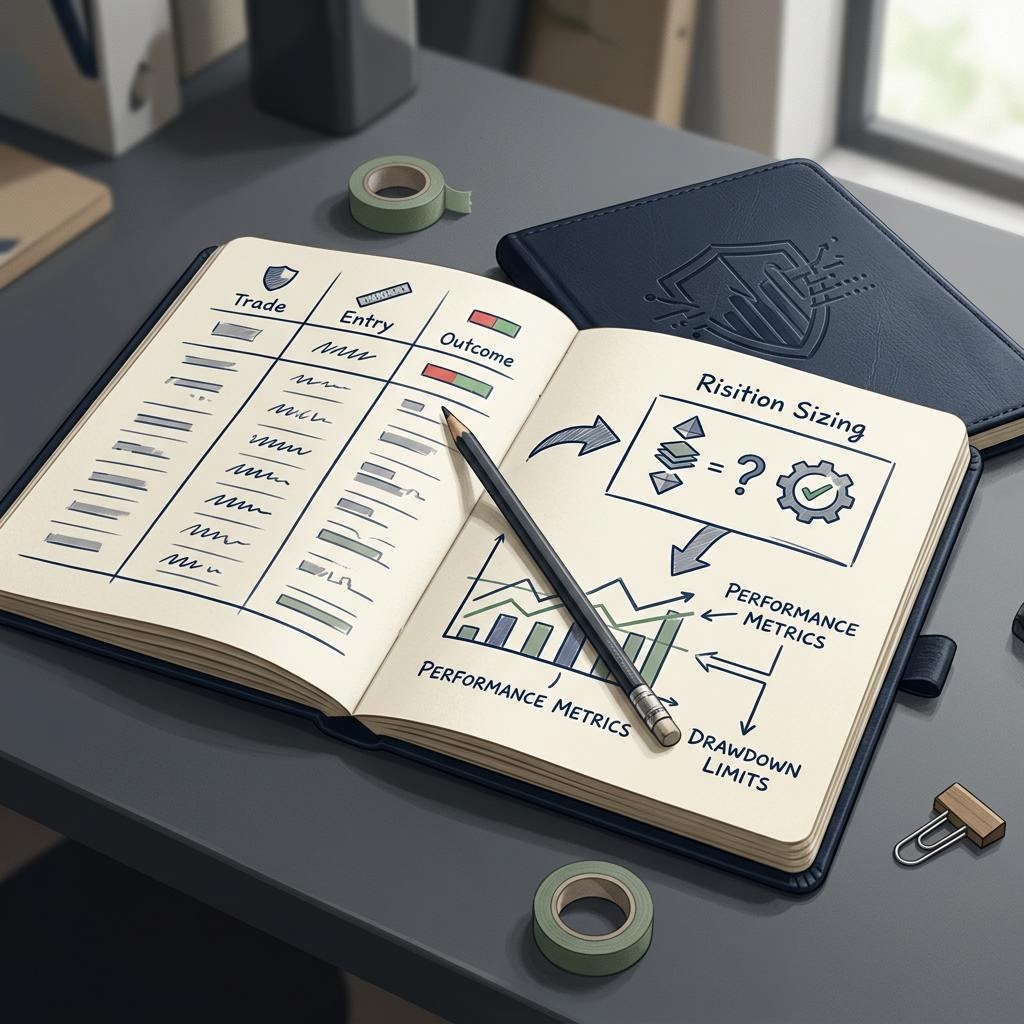
Copying your own methodology among permitted accounts differs from mirroring a stranger’s trades or coordinating a group. Firms may evaluate common ownership, IP use, timing, and substantially identical activity. Treat the firm’s current dashboard, agreement, and written support reply as the controlling source, not a social post or an older review. Record the rule in the units shown by the firm, then translate it into the decision you will make before an order is sent.
List every source and destination account, owner, and device. Do not assume that a personal-account copier or a provider’s common practice is accepted by the program. Work from a deliberately smaller personal limit than the published maximum. That reserve is what absorbs a wider spread, a delayed fill, or an arithmetic mistake without turning an otherwise ordinary trade into a rule breach.
- Verify this point directly: Copying your own methodology among permitted accounts differs from mirroring a stranger’s trades or coordinating a group. Firms may evaluate common ownership, IP use, timing, and substantially identical activity.
- Put this into the operating plan: List every source and destination account, owner, and device. Do not assume that a personal-account copier or a provider’s common practice is accepted by the program.
- Do not proceed until you can explain how "Copy Trading Considerations" affects the next order.
Test on a Demo Environment
A backtest cannot show a rollover spread, missed VPS heartbeat, news spike, or an order rejected because the market is closed. Those are precisely the conditions that can consume a drawdown buffer. Treat the firm’s current dashboard, agreement, and written support reply as the controlling source, not a social post or an older review. Record the rule in the units shown by the firm, then translate it into the decision you will make before an order is sent.
Run the system through normal sessions and a planned disconnect drill. Include a losing sequence and verify that it stops at the daily limit rather than resuming after a restart. Work from a deliberately smaller personal limit than the published maximum. That reserve is what absorbs a wider spread, a delayed fill, or an arithmetic mistake without turning an otherwise ordinary trade into a rule breach.
- Verify this point directly: A backtest cannot show a rollover spread, missed VPS heartbeat, news spike, or an order rejected because the market is closed. Those are precisely the conditions that can consume a drawdown buffer.
- Put this into the operating plan: Run the system through normal sessions and a planned disconnect drill. Include a losing sequence and verify that it stops at the daily limit rather than resuming after a restart.
- Do not proceed until you can explain how "Test on a Demo Environment" affects the next order.
Related guide for Prop Firm EA and Copy Trading Compliance: What Traders Must Check: For the next practical part of your preparation, continue with Prop Firm Challenge Platform and VPS Checklist for Reliable Execution. Technical issues can create slippage, missed exits, or rule breaches. Use this platform and VPS checklist before relying on a challenge account.
How a Passing Service Should Handle Automation
A service using tools should disclose the strategy category, access level, monitoring hours, and escalation path. Vague claims of proprietary automation give you no way to judge rule compatibility or account risk. Treat the firm’s current dashboard, agreement, and written support reply as the controlling source, not a social post or an older review. Record the rule in the units shown by the firm, then translate it into the decision you will make before an order is sent.
Require written scope and read-only reporting where possible. Keep the ability to revoke access, disable the EA, and obtain a trade log without asking the provider. Work from a deliberately smaller personal limit than the published maximum. That reserve is what absorbs a wider spread, a delayed fill, or an arithmetic mistake without turning an otherwise ordinary trade into a rule breach.
- Verify this point directly: A service using tools should disclose the strategy category, access level, monitoring hours, and escalation path. Vague claims of proprietary automation give you no way to judge rule compatibility or account risk.
- Put this into the operating plan: Require written scope and read-only reporting where possible. Keep the ability to revoke access, disable the EA, and obtain a trade log without asking the provider.
- Do not proceed until you can explain how "How a Passing Service Should Handle Automation" affects the next order.
Automation Compliance Checklist
The final check is a sign-off, not a box-ticking exercise. A permitted algorithm can become non-compliant after a platform change, rule update, or a new copy destination. Treat the firm’s current dashboard, agreement, and written support reply as the controlling source, not a social post or an older review. Record the rule in the units shown by the firm, then translate it into the decision you will make before an order is sent.
Reconfirm permission, credentials, symbol mapping, sizing, event restrictions, and the emergency stop on the same day the paid account goes live. Work from a deliberately smaller personal limit than the published maximum. That reserve is what absorbs a wider spread, a delayed fill, or an arithmetic mistake without turning an otherwise ordinary trade into a rule breach.
- Verify this point directly: The final check is a sign-off, not a box-ticking exercise. A permitted algorithm can become non-compliant after a platform change, rule update, or a new copy destination.
- Put this into the operating plan: Reconfirm permission, credentials, symbol mapping, sizing, event restrictions, and the emergency stop on the same day the paid account goes live.
- Do not proceed until you can explain how "Automation Compliance Checklist" affects the next order.
Final Takeaway
Useful automation makes a conservative plan easier to execute and audit. It should not conceal who traded, multiply risk, or substitute a software setting for an understanding of the rules.
If the firm will not confirm the setup or the provider will not explain it plainly, pause. A manual, documented process is preferable to an automated one that creates uncertainty around access or eligibility. For the wider comparison, return to the prop firm challenge pass service guide before choosing an evaluation or support provider.