
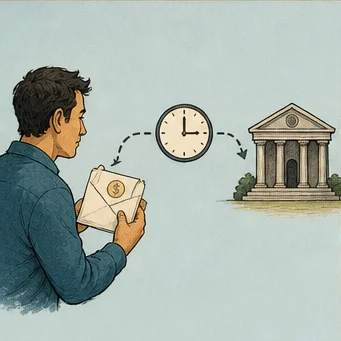
A payout screenshot can look convincing at a glance. It may show a payment notification, a certificate, a dashboard balance, or a message from a trader. Those records do not all prove the same thing. Some show a request was submitted, some show that a firm approved a reward, and some may show money reaching a payment account. The difference matters when a trader is deciding where to spend an evaluation fee or whether to trust a service claim.
This guide explains how to assess prop firm payout proof without treating a single image as a guarantee. It separates the event shown from the broader claim being made, suggests questions that clarify missing context, and explains how to protect private information during verification. The goal is not to label a firm or trader as honest or dishonest based on a screenshot. It is to help readers make a decision that fits the evidence they can actually inspect.
Payouts are governed by the rules of the specific firm, account type, and agreement. A proof example cannot replace those terms, and one person's result cannot predict another trader's outcome. Use the steps below to distinguish evidence from interpretation, then confirm any material detail with the firm or provider before committing money.
If you are comparing independent preparation with structured support, the main prop firm passing service guide places how to verify prop firm payout proof before you join inside the complete evaluation process.
Define the Claim Before Reviewing the Proof
Start by writing down the precise claim that the proof is meant to support. Is the claim that a challenge was passed, a funded account was opened, a payout request was submitted, a payout was approved, or funds arrived in a bank or payment account? These are different events. A certificate may support the claim that a stage was completed, but it does not establish that a payout was requested or settled. A dashboard figure may show a balance without showing whether it can be withdrawn.
This distinction keeps a prop firm payout proof review fair and useful. If a provider says a trader received a payment, ask what record shows the completed transfer. If the claim is only that a request is pending, the evidence should be described as a pending request rather than a received payout. Clear labels reduce the chance that a true but limited record is presented as proof of a broader result.
Separate a Challenge Pass From a Payout
A challenge pass is not the same as a payout. Passing may lead to identity checks, contract acceptance, account review, or a separate funded-stage account. Those steps can have their own rules and approval conditions. Even a funded account can show profit that is not yet eligible for withdrawal. A prop firm payout proof example should therefore identify which stage it covers and avoid implying that a pass automatically produces cash.
The account path can include several distinct checkpoints: evaluation completion, verification if the product uses it, activation of the funded account, trading under funded-stage conditions, a payout request, review of that request, and a payment settlement. The exact sequence depends on the firm's product. When a post compresses the whole sequence into one sentence, ask which step the record actually documents. That question is more informative than arguing about whether the screenshot looks professional.
Understand What Each Type of Evidence Can Show
A trading dashboard can show account status, balance, closed profit, or a pending withdrawal. It may be useful for confirming the account stage, but a displayed balance is not necessarily an approved or paid withdrawal. A certificate may confirm that a firm recognized a milestone, yet it may omit the account's later history. A screenshot of a payment service can show a transfer record, but it may not identify the trading account or the rules under which the money was earned.
An email or platform notification can add context, especially when it names the firm, account holder, amount, date, and payment status. It still needs careful interpretation. A notification saying that a payment is being processed is not identical to a completed settlement. A public post from a trader may give useful first-hand context, but it is still a personal statement unless supported by records that show the underlying event.
Think of each record as one piece of a chain. One item may show a request, another may show an approval, and a separate bank or processor record may show arrival. A reliable payout proof review describes the scope of each item instead of stacking several incomplete records and calling the entire set conclusive.
Check Who Issued the Record
Look for the source of the record. Was it generated by the prop firm's dashboard, sent from a company email address, issued by a payment provider, or posted by an individual in a community? The source affects what the document can establish. A company-generated status page can be more directly connected to an account than a text caption, while a bank record may show a transfer but not explain why it was paid.
When a service shares a record, ask whether the account holder agreed to have it shown. Check that private details have been hidden safely. The person who posts an image may not be the person named on it. A familiar logo does not prove that a record is real, since a logo can be copied. The aim is to learn where the record came from and what it shows. It is not a reason to demand another person's password, full bank statement, or private account access.
Match the Date to the Account and Program
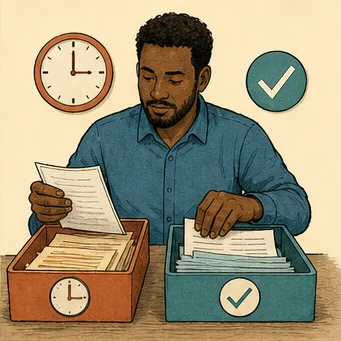
A useful record has a date or a time window that can be connected to the account and product being discussed. A screenshot without a date can still be genuine, but it is harder to compare with the firm's rules or with the claim around it. Ask whether the account was an evaluation, verification, funded account, or another product. Rules and payout schedules can differ across those stages, so a result from one product may not apply to another.
Check whether the displayed date is a creation date, a request date, an approval date, or the date a payment arrived. Those moments can be separated by days or weeks. Time zones can also change how a date appears in screenshots from different systems. A careful prop firm payout proof review does not overstate precision when the record only shows a partial date or a cropped timeline. It notes the limitation and requests a clearer explanation if the date affects the decision.
Read the Amount and Currency in Context
Record the amount exactly as shown, including its currency and whether it is gross or net. A reward figure displayed in a dashboard may not equal the amount a trader receives after a profit split, fees, currency conversion, withholding, or other deductions. A screenshot that says 5,000 without a currency symbol is incomplete for comparison. It may also be a simulated account balance or a pre-approval figure rather than a settled payment.
Do not compare two payout examples by headline amount alone. Account size, profit split, withdrawal conditions, processing fees, dates, and account stage can all differ. If the amount is shown in a currency unfamiliar to the reader, avoid converting it using a guessed rate. Ask whether the figure is before or after deductions and which currency was actually paid. These details help prevent a large-looking number from becoming an unsupported estimate of take-home income.
Follow the Whole Payout Timeline
A single image rarely shows the full timeline. A trader may have requested a withdrawal, received a question from the firm, provided additional documents, and then waited for the payment processor. A public post may show only one of those moments. When evaluating prop firm payout proof, ask what happened immediately before and after the screenshot and whether the final status changed.
A timeline can be shared without exposing private data. The account holder can state the month of the request, its status, when it was approved, and whether funds arrived. Account numbers and other private details can stay hidden. If the service cannot say whether the payment is pending or complete, that point is still unknown. An expected wait is not a promise. Other accounts may face a different review, a request for more records, or a different payment route.
Ask Whether the Example Is Typical
One successful payout can demonstrate that a particular payment occurred, if the record is genuine and correctly described. It does not show how often similar accounts receive payouts, how many requests were declined, or whether the result is typical. A service may share its strongest examples because those are the most compelling stories. That selection does not make the examples false, but it does limit what can be inferred from them.
For broader claims, ask for the denominator and time period. If a provider says that many clients were paid, what counts as a client, a payout, or a completed account? Are repeat withdrawals from one person counted separately? Are failed evaluations and accounts that never requested a payout included? A prop firm payout proof review should distinguish a few documented examples from a measured track record. If a provider cannot share a reliable sample, describe the evidence as individual cases rather than a success rate.
Related guide for How to Verify Prop Firm Payout Proof Before You Join: A useful companion for this decision is Prop Firm Payout Readiness: What to Do After You Pass. Build your funded-stage plan before the evaluation ends. This guide covers payout conditions, account protection, documentation, and sustainable risk.
Compare the Evidence With the Applicable Rules
A payout record is more useful when the relevant account terms are known. The product may have a minimum number of trading days, a payout threshold, a consistency condition, a profit split, or restrictions on the trading activity. These details can change by account type and over time. Do not assume that a screenshot from an older account reflects the rules for a new purchase.
Ask which version of the firm's terms applied to the account when it traded and when the payout request was made. If the account was migrated, reset, or merged, the firm may have supplied separate conditions. The account holder should compare the record with the product dashboard and agreement rather than rely on a provider's summary. A payout example can still be useful without proving that the same terms are currently available to every reader.
Distinguish Requested, Approved, Processing, and Paid
Status words carry different meanings. Requested means the trader submitted a withdrawal. Approved means the firm accepted it under its review process. Processing means a payment action may be underway. Paid or settled should refer to funds reaching the receiving account, not merely a message that a request is being handled. If the evidence uses a vague word such as released, ask what happened next.
A screenshot may combine a status label with a chat message, certificate, or notification. Read each part on its own. A chat message is a statement by its author, while a payment record is a system-generated entry. Neither should be described as stronger than it is. This simple status check prevents pending requests from being presented as completed payouts and helps readers compare examples without dismissing genuine but incomplete updates.
A Short Example of How to Read the Evidence
Consider a hypothetical post that includes a challenge certificate, a funded-account dashboard, and a payment notification. The certificate may support the claim that an evaluation stage was completed. The dashboard may show that a funded account existed and displayed a profit. If the notification says that a withdrawal is being processed, it supports a claim that a request reached a processing step. None of those details alone confirms that the money settled into the account holder's bank or payment service.
The next questions should follow the gaps: Was the notification issued by the firm or the payment processor? Does it identify the same account holder? Is the date visible? Does the final status show completion? A clear redacted record or a direct statement from the account holder may answer some of these without exposing account credentials. If the final transfer cannot be confirmed, describe the example as a payout in progress rather than a received payout.
This example is not a template for judging every screenshot. It shows how to keep each conclusion tied to the part of the record that supports it. A careful reader can acknowledge that the materials provide useful context while still identifying the final settlement as unconfirmed. That is more accurate than dismissing all evidence or treating a collection of partial records as conclusive.
Recognize What a Screenshot Cannot Show
A screenshot is a still image of one screen at one moment. It may omit the page address, account name, surrounding status, earlier messages, or later updates. It can be cropped for privacy, but cropping also removes context. Compression, phone display scaling, and small text can make labels hard to read. These limits are not proof that the image is false. They are reasons to describe what remains unconfirmed.
A screenshot also cannot establish that a payment will repeat, that a service caused the result, or that every client follows the same path. A trader might have used several strategies, passed on a later attempt, or received a payout under a different account arrangement. Avoid causal claims unless there is evidence linking the service activity to the exact account event. A careful review separates what is visible from what the caption asks the reader to conclude.

Respect Privacy When Evidence Is Redacted
Bank and trading records hold private data that should not be shared in full. Names, email addresses, account numbers, bank details, and payment codes can put the account holder at risk. Hiding those details is often the right choice. A person who does not show a full record is not necessarily hiding a false claim. It is possible to protect private data and still explain what happened. Judge the facts that remain visible, then note what cannot be checked.
At the same time, redaction can remove details needed to assess a claim. If the amount, date, sender, or transaction status is hidden, ask whether the account holder can confirm those facts in a safer format. Do not ask for passwords, one-time codes, full bank statements, or unrestricted dashboard access. Evidence should be shared through a controlled, consent-based process, with only the minimum information needed to answer the question.
Use Community Reviews as Context, Not a Verdict
Community posts can help you choose what to ask. Traders may describe delays, requests for records, support replies, or the steps before a payment. These details can be useful. Still, a username and a positive comment do not prove that a transfer took place. Read negative posts with the same care. A complaint may concern a different product, a later account stage, or a dispute about what a rule means.
Look for details that agree across posts from people who are not linked to each other. Also check whether the reviews may come from the same group or paid campaign. Repeated wording, the same cropped image, or missing dates call for more context. They do not justify a firm claim of fraud on their own. Read both positive and negative accounts. Then compare them with the written terms and records tied to the event.
Notice Gaps Without Jumping to Conclusions
A mismatch in dates, names, amounts, or account sizes may have a simple cause. The record may use another time zone or currency. A name may be hidden for privacy. There may also be an error in the caption. Write down what does not match and ask a clear question about that point. The answer should explain the gap. Claims about a firm's fame, or pressure to pay quickly, do not answer a question about the record.
Pay attention to claims that change when details are requested. If a pending request becomes a settled payment in one conversation, or the claimed account size shifts between materials, pause before relying on the example. Keep a neutral record of what was stated and what document supports it. This approach helps separate an unresolved detail from a deliberate misrepresentation, which cannot be determined from a single cropped image alone.
Ask Clear Questions Before Paying
Ask what the evidence shows in plain terms: Was the account in evaluation or funded status? Was the amount requested, approved, processing, or received? What month did the event occur, and which product terms applied? If the payout example is being used to support a service recommendation, ask whether the account holder used that service and what specific part of the process the provider handled.
Ask what the service counts as a successful result. Does its published rate include failed attempts, or only accounts that reached a later stage? Get the work scope, full fee, billing period, refund terms, and access rules in writing. None of these questions needs a third party's private account. If the replies are vague, take more time. Pressure to pay now does not make an unclear offer safer. Check the terms before you send money or share a login.

Related guide for How to Verify Prop Firm Payout Proof Before You Join: For the next practical part of your preparation, continue with Prop Firm Passing Service Due Diligence Checklist. Ask the operational questions before paying or sharing information: who is involved, what is permitted, how risk is controlled, and how access ends.
Keep a Simple Evidence Log
A short evidence log makes comparison more reliable. Record the date you saw the claim, the person or business that published it, the type of evidence shown, the payout status, the account stage, and the important details that were missing. Save a copy of public material only when doing so is lawful and consistent with the platform's terms. Do not store another person's private financial data just because it appeared in a group chat.
Keep the log factual. Use notes such as request submitted, approval shown, settlement not confirmed, or account type unclear. Avoid writing that a provider is proven, fraudulent, or guaranteed unless the evidence actually establishes that conclusion. The purpose is to remember what was checked and what still needs an answer. If new information arrives, add it with its date instead of replacing the original record.
Separate Payout Evidence From a Service Promise
A payout screenshot is not a service agreement. It does not state what a provider will do, how account access works, who controls risk, what happens after a failed attempt, or whether a refund applies. Those promises belong in the written offer. Review the terms independently and compare them with the firm's rules for the specific account.
If a provider uses payout examples in marketing, ask whether the examples are from its clients, whether the clients consented to publication, and whether the outcome depends on activity the firm permits. A service may have helped with preparation without placing trades, or the account holder may have used several kinds of support. Do not infer the service model from a payment image. Confirm the actual work and responsibility split before deciding.
Decide What to Do When Proof Is Incomplete
Sometimes the evidence remains incomplete after reasonable questions. The right response is not always to call the claim false. It may be enough to classify it as unverified and avoid using it as the reason to pay. A business can still explain its terms and process clearly, but a buyer should not treat an unsupported result as a substitute for checking those details.
If the missing information concerns a detail that changes the decision, pause. For example, do not assume that an account is eligible for withdrawal when the only record shows a dashboard profit. Do not assume that a service's results apply to your account if the firm's rules or product differ. A decision made with a known information gap is safer than one that treats an unknown as confirmed.
Compare Providers on More Than Payout Screenshots
Proof is only one part of checking a service. Also review what it will do, how it keeps account access safe, its risk limits, support, refund terms, and trade records. You can ask about these points before the account is active. A payout image shows an event from the past. It does not explain the whole offer. A polished image should not outweigh vague terms or a request for more access than you are willing to grant.
A fair comparison does not assume that the provider with the largest claimed payout is the best option. Ask what the buyer would receive, what costs are certain, which outcomes are uncertain, and what remains under the buyer's control. If the offer depends on a rule interpretation, confirm it with the firm. Readers comparing a service should also review the broader standards in the site's prop firm passing service guide and the related due-diligence material before deciding.

Use a Practical Decision Workflow
Begin with the claim, not the image. Name the exact event that is supposed to have happened, then identify the record that shows it. Check the source, date, account stage, amount, currency, and status. Write down what is still unknown. This order prevents a persuasive screenshot from shaping the questions after the fact.
Next, compare the claim with the firm's terms and the service's written offer. Ask about gaps that could change your choice. Do not share a login or payment details until the work scope is clear. If the proof supports one case, treat it as one case. If the service makes a wider claim, ask which dates and accounts it covers. Ask how failed cases were counted before using the figures to compare offers.
Protect Your Money and Personal Information
Never let a payout claim create urgency. A deadline, limited spot, or promised return does not make incomplete proof stronger. Keep money for challenge fees and service costs separate from rent, emergency savings, and funds needed for ordinary expenses. Do not borrow or increase trading risk because a screenshot suggests a payout will arrive quickly.
Share as little private data as the check needs. Ask questions in writing. Remove login details from screenshots. Before sending proof of identity, check who will receive it and why it is needed. If a service asks for remote access or account control, learn what it can do and how to end that access. Keeping your data safe is part of the check. It is not a task to leave until after you have paid.
Make the Evidence Match the Decision
Good prop firm payout proof can help confirm that a specific event occurred, but it cannot promise a repeat result or replace a review of the rules, service terms, and account risks. Match the evidence to the exact claim, distinguish a request from a settled payment, and label anything that remains uncertain.
The strongest decision is the one that does not need a screenshot to carry more weight than it can support. Keep the account holder's privacy intact, ask for written clarification, and pause when a material detail is unresolved. That standard gives readers a fair way to assess positive and negative claims without mistaking a story for a guarantee.
Final Takeaway
A payout example is useful when its source, date, account stage, amount, and payment status are clear. It is not a guarantee of future withdrawals, a verified service success rate, or proof that the same result is available under a different account's rules.
Before relying on prop firm payout proof, state what it demonstrates, confirm what it leaves uncertain, and compare it with the current written terms. If a missing detail changes the decision, wait for clarification rather than filling the gap with an assumption.